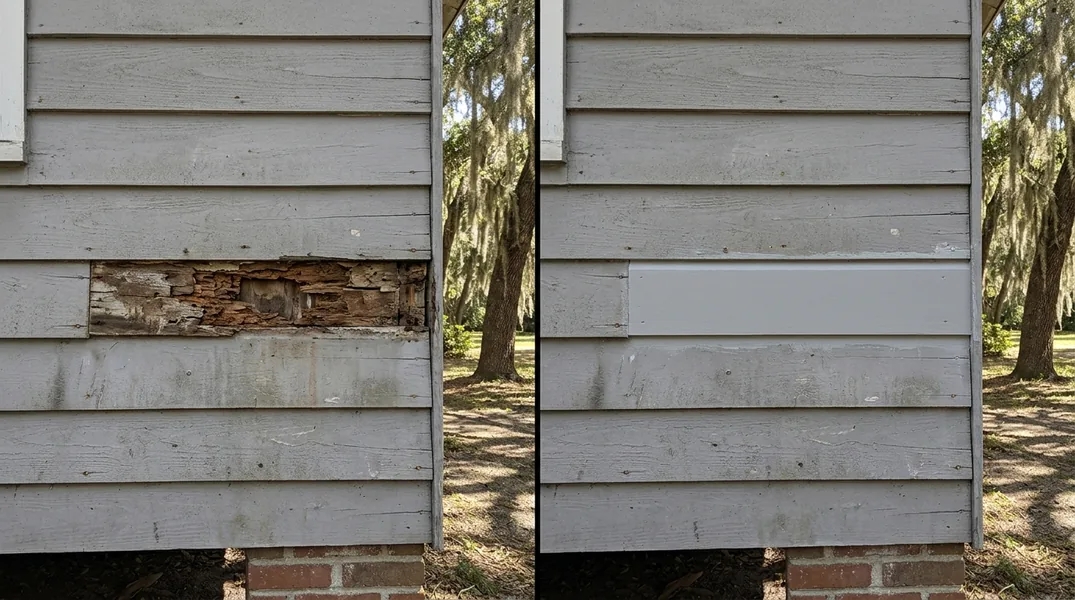
Dry Rot vs Termite Damage: Why the Difference Matters
If you own a home in Jacksonville, the sight of soft, crumbling wood is alarming. But before you panic, you need to know what you're actually dealing with. Dry rot and termite damage might look similar at first glance, but they require completely different repair approaches. Misidentifying the problem could lead you down the wrong path, wasting time and money on the wrong solution.
The good news is that with a little knowledge, you can tell the difference yourself. Understanding whether you have dry rot or termite damage helps you take the right action quickly. This matters because both problems get worse over time, but the urgency and treatment options differ significantly. A professional eye can confirm your suspicions, but knowing what to look for gives you a head start in protecting your home.
What Does Wood Rot Look Like? Visual Signs of Dry Rot
Dry rot creates a distinctive appearance that sets it apart from termite damage. The affected wood becomes soft, spongy, and crumbly to the touch. When you press on it with a screwdriver or even your fingernail, the wood collapses easily because the fungus has eaten away at the cellulose fibers from within. The wood often turns a dark brown or gray color, and you may notice it shrinks and cracks in a pattern that resembles a checkerboard or cube shape. This cracking pattern is actually one of the most reliable visual clues that you're dealing with dry rot rather than termite damage.
Another telltale sign of dry rot is the presence of white, thread-like fungal growth called mycelium. You might see this cottony growth on the wood surface or in the surrounding area. The affected wood also tends to feel lighter than normal wood because the fungus has removed so much of its structural material. In Jacksonville's humid climate, dry rot thrives in damp, poorly ventilated spaces like crawl spaces, basements, and around plumbing leaks. If you notice a musty smell in addition to the visual signs, that's another strong indicator of fungal wood rot.
Signs of Termite Damage in Wood: What to Look For
Termite damage looks quite different from dry rot, and recognizing these differences is crucial. When termites infest wood, they create a honeycomb-like pattern of tunnels and galleries inside the wood. From the outside, the wood surface may appear intact or only slightly damaged, but the interior is often completely hollowed out. This is a key difference from dry rot, where the surface often shows obvious discoloration and crumbling. Termites are also much neater eaters than fungi, leaving behind smooth tunnel walls and often leaving a thin shell of wood on the surface while destroying everything underneath.
Another distinctive sign of termite damage is the presence of mud tubes. Subterranean termites, which are common in Jacksonville, build these pencil-thin mud tunnels from the soil to the wood they're feeding on. These tubes protect the termites from drying out as they travel. You'll often find these tubes running up foundation walls, piers, or along wooden beams. Additionally, termite damage wood tends to remain relatively hard and doesn't develop the characteristic cube-shaped cracks that dry rot produces. You might also notice termite droppings, which look like tiny pellets or sawdust, near infested wood. Unlike dry rot, termite damage doesn't produce a musty odor.
Key Differences: Moisture, Spread, and Progression
The environmental conditions that cause these two problems are fundamentally different, and understanding this helps you identify which one you're facing. Dry rot is caused by a fungus that requires moisture to grow and spread. It thrives in damp, poorly ventilated areas and spreads through the wood grain, following moisture pathways. Dry rot can actually spread through masonry and other materials, moving beyond just the wood itself. Termite damage, by contrast, is caused by living insects that feed on cellulose. While termites prefer moist wood, they don't require it in the same way fungi do. They can survive in drier conditions and are more likely to spread horizontally across different wooden structures.
The progression of each problem also differs. Dry rot spreads relatively slowly through continuous moisture exposure, but once it starts, it can eventually compromise large sections of wood if left untreated. Termite damage can progress more rapidly in some cases because termite colonies can include thousands of individuals all feeding simultaneously. However, termite infestations might go unnoticed for years if the colony is small or if the damage is hidden in walls or crawl spaces. Both problems are serious and require professional attention, but the timeline and urgency may differ. If you suspect either issue, calling Jacksonville Carpentry at (904) 605-8456 for a professional inspection is the smartest move.
Wood Rot & Dry Rot Repair Near Me: When to Call a Professional
Once you've identified that you have either dry rot or termite damage, the next step is getting professional help. While some homeowners are tempted to handle repairs themselves, both of these problems require specialized knowledge and tools to fix properly. Wood Rot & Dry Rot Repair involves removing all affected wood, treating the underlying moisture problem, and replacing damaged sections with new, properly treated lumber. Similarly, Termite Damage Repair requires not just replacing wood but also addressing the termite infestation itself through pest control measures.
A professional carpenter can assess the extent of the damage, which is often much worse than what appears on the surface. They can identify whether structural elements like beams or floor joists are compromised, which affects the safety of your entire home. In cases where damage is severe, you might need Floor Joist & Subfloor Repair or even Beam Replacement & Load-Bearing Wall Removal. Jacksonville Carpentry specializes in all these services and can provide you with a clear assessment and repair plan. Contact us at (904) 605-8456 or request a free estimate to get started.
Prevention Tips: Protecting Your Jacksonville Home
The best way to deal with wood rot and termite damage is to prevent them in the first place. For dry rot prevention, focus on moisture control. Ensure your home has proper ventilation in crawl spaces and attics, fix leaking pipes and roofs promptly, and grade soil away from your foundation so water doesn't pool against your home's wood elements. Keep gutters clean and functioning so rainwater doesn't overflow near your home's structure. In Jacksonville's humid climate, consider using a dehumidifier in damp areas like basements and crawl spaces.
For termite prevention, maintain a barrier between soil and wood by ensuring there's at least 18 inches of clearance between the ground and any wooden structural elements. Remove dead trees and stumps from your property, as these attract termites. Store firewood away from your home and off the ground. Have your home inspected regularly for termite activity, especially if you live in an older home or have had termite problems in the past. Many pest control companies offer annual inspections as part of their service. By staying vigilant and addressing moisture and pest issues early, you can avoid the costly repairs that come with advanced wood rot or termite infestations.
Looking for a professional carpentry contractor in Jacksonville? Jacksonville Carpentry responds fast for all your carpentry needs.
Get a Free QuoteOur services: Wood Rot & Dry Rot Repair · Termite Damage Repair · Floor Joist & Subfloor Repair