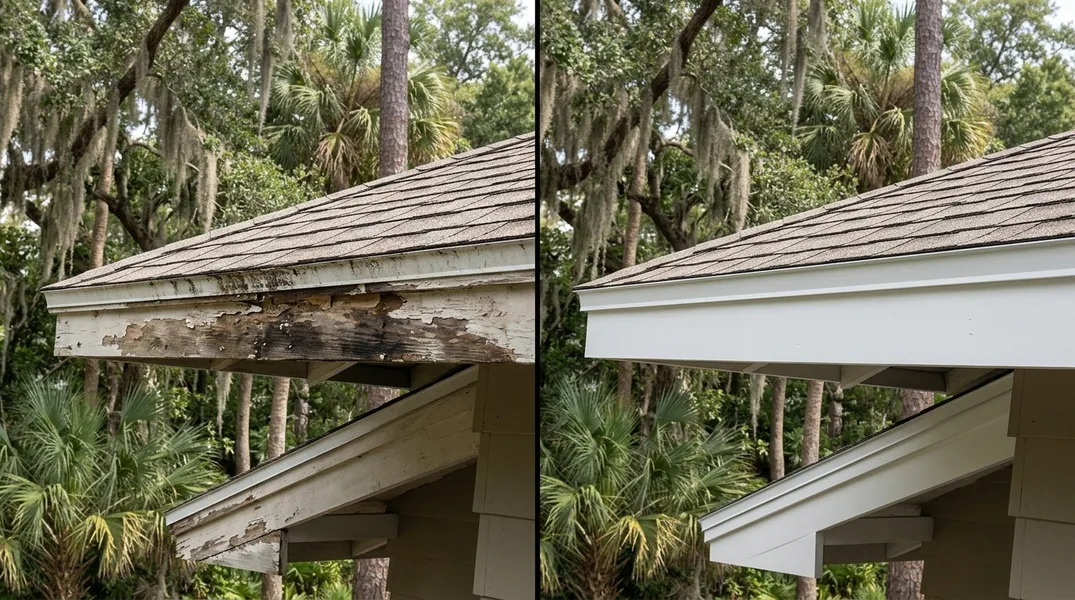
Why Riverside and Avondale Bungalows Face Unique Wood Challenges
If you own a craftsman bungalow in Riverside or Avondale, you already know these homes have character. Built primarily between 1910 and 1930, they feature distinctive architectural details, deep eaves, exposed beam work, and extensive wood trim that define the neighborhood's charm. However, that same beautiful woodwork is also your home's vulnerability in Jacksonville's humid, subtropical climate.
The combination of high humidity, frequent rainfall, and temperature fluctuations creates an ideal environment for wood deterioration. Unlike newer homes built with modern moisture barriers and pressure-treated lumber, vintage bungalows rely on materials that were never designed to withstand a century of weather exposure. Wood siding, exterior trim, window frames, and decorative brackets absorb moisture year-round, making these homes particularly susceptible to Wood Rot & Dry Rot Repair needs. Understanding this reality is the first step toward protecting your investment.
Common Wood Damage Patterns in Historic Jacksonville Homes
Most homeowners in Jacksonville don't realize wood damage often starts invisibly. By the time you notice soft spots, paint peeling, or visible decay, the damage has usually progressed for months or even years. The most common problem areas in Riverside and Avondale bungalows include the fascia boards that run along the roofline, the skirting boards at ground level, window trim and sills, and decorative exterior brackets that are exposed to constant moisture.
Another frequent issue involves the interface where wood meets concrete or soil. Many bungalows have wood posts or structural elements that sit too close to the ground, allowing capillary moisture to wick upward into the wood fiber. This is particularly problematic in older homes where the foundation may have settled, creating gaps that allow water to pool. Additionally, Termite Damage Repair is often discovered during routine wood rot inspections, as termites and wood-rotting fungi frequently occur together in humid climates. The key is catching these issues early, before structural integrity becomes compromised.
Wood Siding Repair: Protecting Your Home's First Line of Defense
Wood siding repair is one of the most important maintenance tasks for a vintage bungalow. The original lap siding on these homes is typically heart pine or cypress, beautiful materials that age gracefully but require consistent protection. Once the protective paint or stain layer fails, water penetrates the wood grain, and deterioration accelerates rapidly. You might notice cupping, warping, or actual soft spots where you can press your finger into the wood.
The honest truth is that some damage requires full board replacement, while other areas can be stabilized with epoxy fillers and refinishing. A professional assessment can distinguish between cosmetic issues and structural concerns. Ignoring early signs of siding deterioration can lead to much more expensive problems, including damage to the wall framing, insulation, and interior walls. Regular inspection and prompt wood siding repair can add decades to your home's lifespan.
Exterior Trim Repair: The Details That Protect Your Home
Exterior trim repair is where many homeowners make budget mistakes. Window trim, door surrounds, corner boards, and decorative moldings are not just aesthetic features. They function as water management systems, directing moisture away from the vulnerable areas where different building materials meet. When trim deteriorates, water bypasses these protective details and penetrates deeper into the home's structure.
Craftsman bungalows often feature elaborate trim work with multiple layers and intricate profiles. This complexity makes them visually stunning but also more prone to water entrapment. Water can sit in crevices and joints, accelerating rot development. Some trim damage can be addressed through careful repair and repainting, while severely compromised trim must be replaced to match the original profile. This is where craftsmanship matters. A proper repair respects the home's historic character while ensuring modern durability. If you're concerned about deteriorating trim on your Riverside or Avondale home, a detailed inspection will reveal whether repairs or replacement is the right approach.
Historic Home Maintenance in Jacksonville: A Long-Term Strategy
Historic home maintenance Jacksonville isn't a one-time project. It's an ongoing commitment to protecting an asset that represents both financial value and community heritage. The most successful bungalow owners approach maintenance systematically, with regular inspections, preventive measures, and timely repairs. This includes maintaining proper drainage around the foundation, ensuring gutters and downspouts function correctly, and keeping vegetation trimmed away from the home's exterior.
Paint and stain protection is critical in Jacksonville's climate. The intense sun, salt air (particularly near the coast), and frequent moisture cycles break down finishes faster than in drier regions. Most experts recommend repainting exterior wood every 5 to 7 years, though this varies based on sun exposure and product quality. Additionally, addressing minor repairs immediately prevents them from becoming major structural issues. A small area of soft trim can be fixed for hundreds of dollars. If left unattended, it can lead to Floor Joist & Subfloor Repair or Beam Replacement & Load-Bearing Wall Removal costs that exceed tens of thousands of dollars.
Getting Professional Help: What to Expect and How to Budget
When you're ready to address wood damage, choosing the right contractor makes all the difference. Look for companies with specific experience in historic home repair, not just general construction. They should understand the structural requirements of older homes, respect original materials and design, and communicate clearly about what can be repaired versus what must be replaced. A reputable contractor will provide a detailed assessment before quoting work, explaining the scope and reasoning behind their recommendations.
Regarding pricing, wood rot repairs vary dramatically based on the extent of damage, materials involved, and accessibility. A small area of trim replacement might cost $500 to $1,500, while extensive siding replacement on a full side of the house could exceed $5,000 to $10,000. The best approach is to get a free estimate from a qualified professional who can assess your specific situation. Jacksonville Carpentry serves homeowners throughout the area and offers transparent evaluations with no hidden costs. Call (904) 605-8456 to schedule an inspection, or reach out online to discuss your home's needs.
Looking for a professional carpentry contractor in Jacksonville? Jacksonville Carpentry responds fast for all your carpentry needs.
Get a Free QuoteOur services: Wood Rot & Dry Rot Repair · Termite Damage Repair · Floor Joist & Subfloor Repair