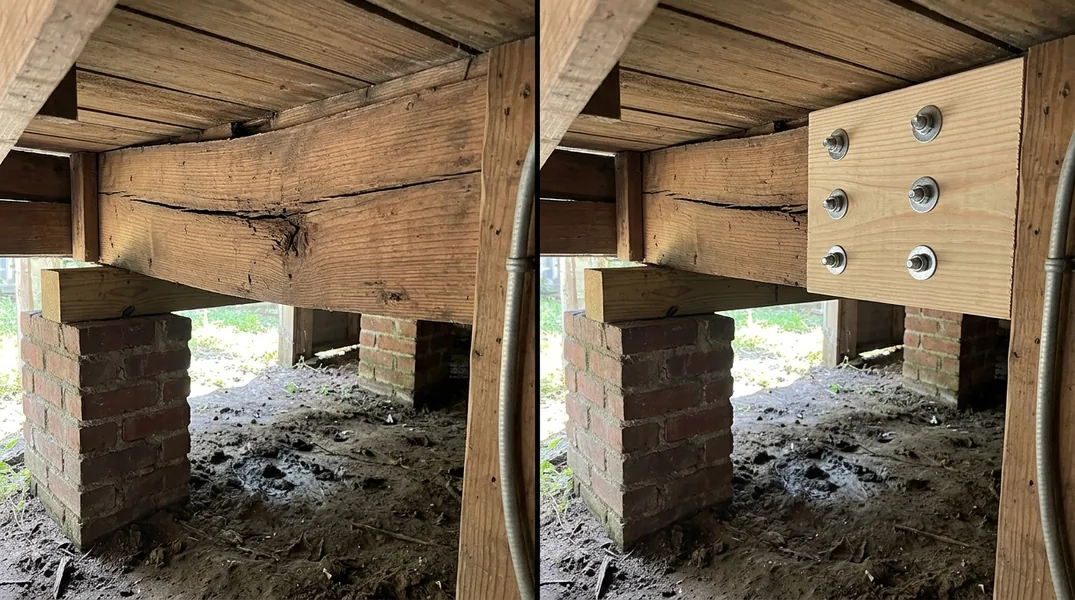
Why Jacksonville Bungalows Develop Sagging Floors
Jacksonville's historic bungalows, many built in the early 1900s, sit on pier and beam foundations that have served homeowners well for over a century. However, time, moisture, and Florida's unique climate take their toll. Sagging floors are one of the most visible signs that your foundation system needs attention.
The problem typically begins with the wooden piers themselves. These support columns, often made of timber, gradually settle, rot, or shift due to soil movement and moisture exposure. Unlike modern concrete foundations, wooden piers in Jacksonville are vulnerable to Florida's high humidity and occasional flooding. When piers fail, the beams they support begin to sag, and that sagging eventually shows up in your living space as uneven floors, sticky doors, and a general sense that something isn't quite right underfoot.
Wood Rot & Dry Rot Repair is often the first step in addressing sagging floors, because rot weakens the structural integrity of both piers and beams. Water intrusion from poor drainage, missing vapor barriers, or plumbing leaks creates the perfect environment for decay. In some cases, Termite Damage Repair is also necessary, as subterranean termites are drawn to moist wood and can hollow out support structures from the inside.
Understanding Pier and Beam Foundation Problems
Pier and beam foundations were the standard in early Jacksonville construction for good reason: they elevate the home above ground moisture and allow air circulation underneath. This design works well in theory, but in practice, the system depends on regular maintenance and sound structural components. When piers settle more than a quarter inch per year, or when they shift unevenly, the beams they support no longer sit level, and the entire floor system becomes compromised.
Settlement happens for several reasons. Soil beneath piers can compress over decades, especially if the foundation was built on fill dirt rather than compacted native soil. Moisture changes cause the soil to expand and contract seasonally. In Jacksonville's sandy soils, drainage issues can lead to soil erosion around pier bases. Additionally, if original wooden piers were not properly treated or if they've been exposed to standing water, decay progresses silently until the structural failure becomes obvious to homeowners walking across their floors.
The beam system itself can also fail independently of pier problems. Wooden beams supporting your floor joists may develop rot, especially where they rest on piers or where they've been in contact with damp soil. Once a beam loses structural capacity, it can no longer support the load, and the floor above begins to sag noticeably. This is where Floor Joist & Subfloor Repair becomes essential, because the joists themselves may also be compromised by rot, moisture, or insect damage.
Repair Solutions: Sistering Floor Joists and Beyond
When floor joists begin to sag or show signs of rot, sistering is one of the most effective repair techniques. Sistering involves fastening a new, pressure-treated joist alongside the damaged one, creating a doubled-up structural member that distributes the load across a larger, stronger surface. This approach is popular because it reinforces the existing structure without requiring complete joist removal, which can be disruptive and costly. The new joist is bolted securely to the old one, and both are properly supported at their ends.
However, sistering is not always the complete solution. If the underlying problem is a failed pier or rotted beam, sistering the joists alone will not stop the sagging. The root cause must be addressed first. This often means Beam Replacement & Load-Bearing Wall Removal work, which requires installing temporary support posts, removing the damaged beam, and installing a new one. In Jacksonville, this is skilled work that demands proper engineering and building permits.
In some cases, piers themselves must be replaced or reinforced. Modern pier repair might involve installing adjustable steel posts beneath the home to provide additional support and to allow for leveling of the floor system. This is more invasive than joist repair but is sometimes necessary to restore the foundation to safe, level condition. The decision between these approaches depends on the extent of damage, the age of the home, and the homeowner's budget and goals.
Sagging Floor Repair Cost in Jacksonville: What to Budget
The pricing for sagging floor repair varies widely depending on the scope of work. A simple joist sistering project for a small area might cost between 800 and 2,500 dollars, while more extensive repairs involving multiple joists, beam replacement, or pier work can easily exceed 10,000 dollars. The most expensive repairs involve full foundation leveling or replacement of multiple structural components, which can run 15,000 to 30,000 dollars or more.
Several factors drive the cost. First, the extent of damage determines how much material and labor is needed. A home with rot affecting only a few joists in one area costs less than one where rot has spread throughout the crawl space. Second, accessibility matters. If the damaged joists are easy to reach, work proceeds faster and costs less. Third, whether the home needs to be leveled during the repair affects the budget. Leveling requires temporary support posts, hydraulic jacks, and careful monitoring, which adds significant labor and equipment costs. Fourth, the requirement for building permits and engineering inspections, which is standard in Jacksonville, adds professional fees but ensures the work meets code.
The best way to understand the true cost for your home is to request a free estimate from Jacksonville Carpentry. Our team will inspect your crawl space, identify all structural issues, and provide a detailed breakdown of labor, materials, and timelines. Call us at (904) 605-8456 to schedule your inspection. Many homeowners are surprised to learn that addressing these problems early, before they worsen, actually saves money in the long run.
When to Call a Professional: Signs Your Floor Needs Repair
Not every slightly uneven floor signals a structural emergency, but certain warning signs should prompt immediate professional evaluation. If you notice a pronounced sag in the middle of a room, especially one that's visible to the eye or measurable with a level, that's a red flag. Similarly, if doors and windows stick or won't close properly, or if you see cracks forming in drywall or plaster, these often indicate foundation movement and floor sagging. A bouncy or springy feeling when you walk across the floor, especially near the center of the home, suggests that joists have lost structural integrity.
Another telling sign is visible rot, mold, or water damage in the crawl space. If you can access the area beneath your home and see soft, discolored wood, or if you notice a musty smell, moisture is actively damaging your structure. Don't delay in getting professional help. The longer these problems persist, the more extensive the damage becomes, and the more expensive the repair. Jacksonville Carpentry has over a decade of experience identifying and fixing these issues in older homes throughout the area. We understand the specific challenges that Jacksonville's climate and soil conditions create for historic foundations.
In Jacksonville Beach and surrounding areas, we've helped dozens of homeowners restore their floors and foundations to safe, level condition. The peace of mind that comes with knowing your home sits on a sound foundation is worth the investment. If you're concerned about sagging floors or pier and beam problems, contact us today at (904) 605-8456 or request a free estimate online. We'll assess your situation honestly and recommend the most cost-effective solution for your specific needs.
Prevention: Protecting Your Foundation for the Future
Once your sagging floor has been repaired, preventing future problems is critical. The most important step is moisture management. Ensure that gutters and downspouts direct water away from your home's foundation. In Jacksonville's rainy climate, proper drainage can mean the difference between a dry crawl space and one prone to rot and pest damage. Maintain a vapor barrier beneath your home if one exists, and consider installing or upgrading it if moisture levels remain high. Proper ventilation in the crawl space also helps keep wood dry and discourages termite activity.
Regular inspections are equally important. Have your crawl space checked annually, especially after heavy rains or flooding. Look for signs of new rot, termite tunnels, or standing water. Address plumbing leaks immediately, as even small drips can saturate wood and accelerate decay. If your home has wooden piers, consider having a structural engineer evaluate them periodically to catch settling or damage early. These preventive measures cost far less than major repairs and help ensure that your Jacksonville bungalow remains structurally sound for decades to come.
Looking for a professional carpentry contractor in Jacksonville? Jacksonville Carpentry responds fast for all your carpentry needs.
Get a Free QuoteOur services: Wood Rot & Dry Rot Repair · Termite Damage Repair · Floor Joist & Subfloor Repair