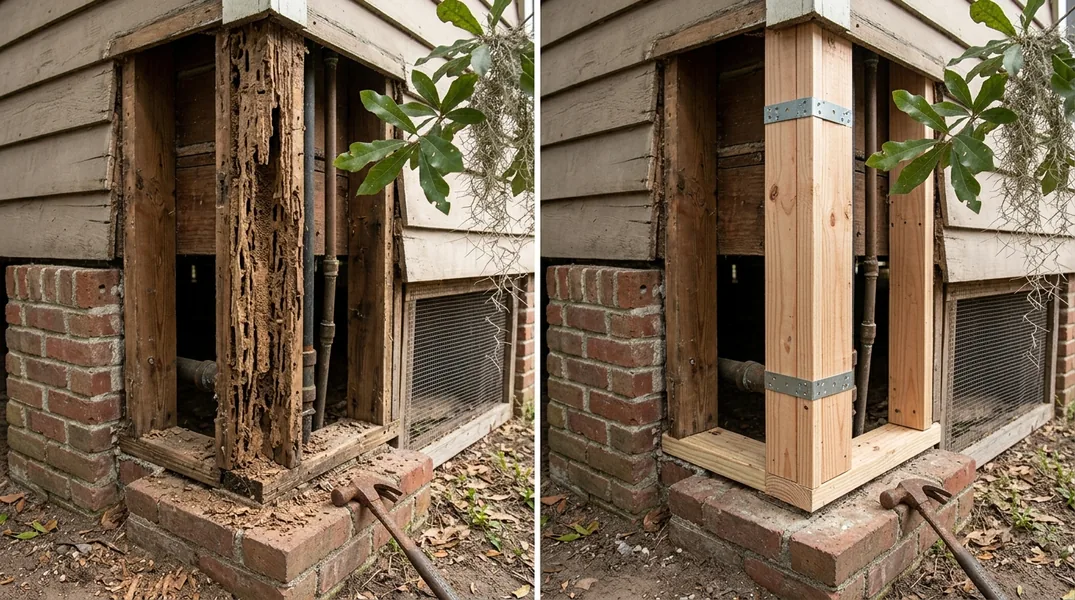
Why Jacksonville's Climate Creates the Perfect Storm for Wood Damage
Jacksonville sits in one of the most challenging environments for wood preservation in the United States. The combination of high humidity, warm temperatures, and seasonal moisture creates ideal conditions for both termites and wood rot to thrive. If you own a home in the area, understanding why your property is at risk is the first step toward protecting it.
The region's subtropical climate means that wood-eating insects remain active year-round, unlike in colder states where winter provides a natural break. Termites, in particular, never truly go dormant in Jacksonville, meaning your home could be under attack at any time. Add to this the frequent afternoon thunderstorms and high water table common to Northeast Florida, and you have moisture levels that encourage both termite activity and fungal decay. Many homeowners are surprised to learn that wood rot and termite damage often occur together, with moisture damage weakening wood fibers and making structures even more attractive to hungry termites.
Understanding the Signs of Termite Damage in Your Home
Recognizing signs of termite damage early can save you thousands of dollars and prevent structural failure. Termites are silent destroyers, often causing extensive damage before homeowners even realize there's a problem. The most common indicator is the presence of mud tubes along foundation walls or wooden supports. These pencil-thin tubes are highways that termites build to travel between their underground colonies and the wood they're consuming. If you spot them, it's time to act quickly.
Other telltale signs include hollow-sounding wood when you tap on it with a hammer, blistering or peeling paint on wood surfaces, and visible tunnels or galleries inside wooden beams. Sagging floors, difficulty opening windows or doors, and small piles of sawdust near baseboards are also red flags. Some homeowners notice a musty odor in crawl spaces or basements, which can indicate both termite activity and the wood rot that often accompanies it. If you've spotted any of these warning signs in your Jacksonville home, professional inspection is essential. The longer you wait, the more structural integrity you lose.
Wood Rot vs. Termite Damage: How to Tell the Difference
Wood Rot & Dry Rot Repair and termite damage may look similar at first glance, but they require different treatment approaches. Understanding the difference is crucial for getting the right solution. Wood rot is caused by fungal decay that breaks down the cellulose in wood, typically occurring in areas with high moisture content. Dry rot, despite its name, also requires moisture to develop and spreads more aggressively than wet rot, sometimes affecting wood that appears dry on the surface.
Termite damage, by contrast, leaves behind hollow galleries and a papery texture as insects consume the wood from the inside out. Wood that's been attacked by termites often crumbles easily under pressure, while rotted wood becomes soft and spongy. Termites also leave behind mud tubes and frass (droppings), which are rarely associated with rot damage. In many Jacksonville homes, you'll find both problems present simultaneously, as moisture damage weakens wood and makes it more susceptible to termite infestation. A professional inspection can definitively identify which problem you're facing and recommend the appropriate repair strategy.
Termite Damage Repair and Wood Rot Repair: What's Involved
Termite Damage Repair typically involves removing the infested wood, treating the area to prevent reinfestation, and replacing the damaged structural components. The scope of work depends on how extensively the termites have compromised your home's frame. In some cases, only surface boards need replacement. In others, critical structural elements like beams, joists, or load-bearing walls have been weakened to the point where they pose a safety risk.
For wood rot issues, the repair process focuses on removing all decayed wood and addressing the moisture source that allowed the rot to develop in the first place. Simply replacing rotted wood without fixing the underlying moisture problem will lead to the same issue recurring within a few years. This is why Jacksonville Carpentry emphasizes comprehensive solutions that tackle both the visible damage and the root cause. Depending on the location and severity, repairs might involve Floor Joist & Subfloor Repair, Beam Replacement & Load-Bearing Wall Removal, or targeted structural reinforcement. Every repair is customized to your specific situation.
Termite Repair Cost in Jacksonville: What to Budget
The cost of termite and wood rot repairs varies significantly depending on the extent of damage, the location of the affected wood, and the complexity of the repair. A minor repair affecting a small section of trim or siding might cost a few hundred dollars, while structural damage requiring beam replacement or floor joist repair can easily run into the thousands. Most Jacksonville homeowners find that early detection saves them substantial money, since catching termites or rot in early stages means less wood needs to be replaced.
For an accurate understanding of what you'll spend, it's essential to get a professional assessment. Jacksonville Carpentry offers a free estimate that includes a thorough inspection and detailed breakdown of recommended repairs and their costs. Factors that influence pricing include the volume of wood to be replaced, accessibility of the damaged area, whether structural reinforcement is needed, and local labor rates. Rather than viewing repair costs as an expense, consider them an investment in your home's safety and value. Untreated termite or wood rot damage will only worsen and become exponentially more expensive to fix.
Prevention and Next Steps: Protecting Your Jacksonville Home
The best approach to wood rot and termite damage is prevention. Maintain proper drainage around your home's foundation, keep gutters clean and functioning, ensure crawl spaces are well-ventilated, and address any plumbing leaks immediately. Trim tree branches away from your roof and siding, and avoid stacking firewood directly against your home. Regular inspections, especially in older homes or those showing signs of moisture problems, can catch issues before they become catastrophic.
If you've noticed any signs of termite damage or suspect wood rot in your Jacksonville home, don't delay. Contact Jacksonville Carpentry today at (904) 605-8456 or request a free estimate to have a professional evaluate your situation. The sooner you address structural damage, the better your outcome will be. Your home is likely your most valuable asset, and protecting it from termites and rot is a responsibility worth taking seriously.
Looking for a professional carpentry contractor in Jacksonville? Jacksonville Carpentry responds fast for all your carpentry needs.
Get a Free QuoteOur services: Wood Rot & Dry Rot Repair · Termite Damage Repair · Floor Joist & Subfloor Repair